
Such is the natural order: we are born, we live, we die, and the earth extracts the nutrients from our carbon-based vessels to feed new life again. Nothing is wasted. Everything becomes something else.
It’s funny—some of the best collaborations start with what looks like conflict. In this case, moths in the closet: villains turned unlikely partners in the creative practice. The realisation that originality doesn’t always come from an uncut roll of fabric or or pristine skein of yarn; sometimes it’s sparked by having to respond to a flaw, a mistake, or a bit of damage we didn’t ask for.
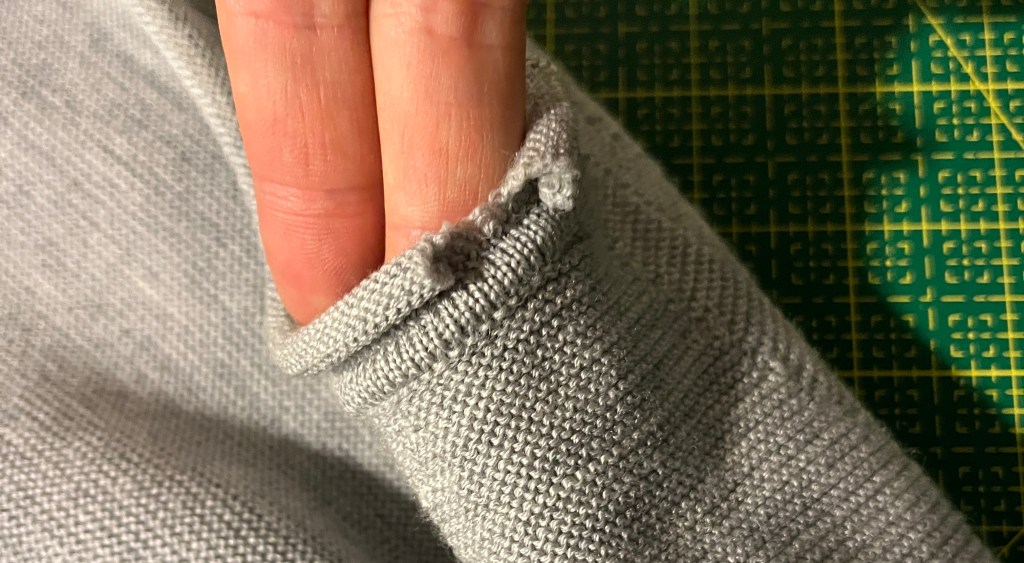
From a standard standpoint, moth holes are a nightmare: ruined clothes turned to waste in the space of a few tiny bites. A perfect example of entropy on a domestic scale.
But what if the holes weren’t just gaps, but openings—inviting a creative response? Darning becomes something to translate into bold, decorative art meant to celebrate.
The moth’s “work” establishes the foundation by providing a problem to solve, mirroring the core principle of design thinking: that innovation thrives under limits. Perfection is boring, even paralysing. A moth-eaten sweater proposes a clear call to action — how can it be salvaged? And the answer is not to erase the damage, but to integrate it into something richer.
“Creative destruction” describes the idea that breaking down old systems is what makes room for new ones. In this tiny ecosystem, the moth is the destroyer, making the old, mass-produced garment obsolete. The mender is the innovator, utilising that destruction to create a new product with an entirely different value proposition.
The “Salvage” garment is valuable precisely because of its visible history of damage and repair; its story is its worth. The destruction is not a flaw to be hidden, but the starting point for unique craftsmanship.
In a culture obsessed with the new, the seamless, the perfect, the moth-and-mender partnership provides a counter-narrative: that our most meaningful work may not spring from utilising virgin materials, but from the maintenance and repair of what’s already here.
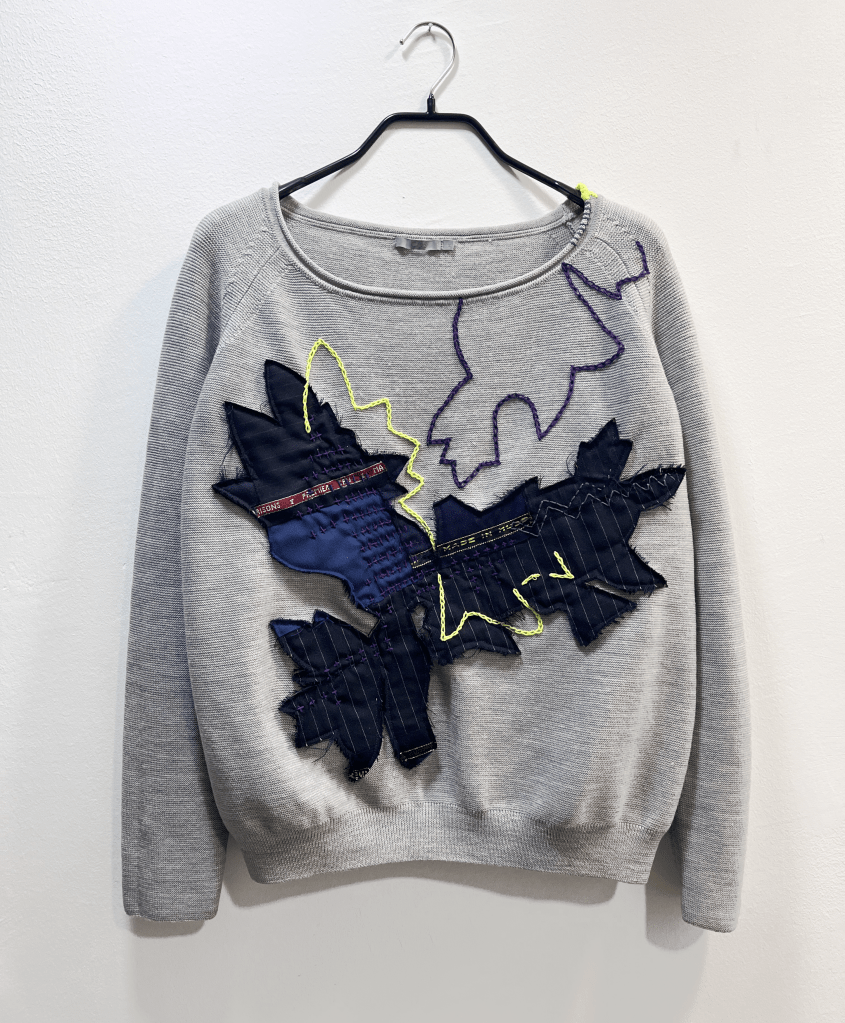
 SALVAGE BY DESIGN
Leave a comment